
Can a Pothole Really Throw Off Your Alignment? The Truth About 4-Wheel Alignment in Bloomington IN
If you have driven around Bloomington for any length of time, you know a pothole can appear at exactly the wrong moment. You may hear a sharp bang, feel the steering wheel jump, and then continue on your way because the vehicle still seems drivable.
But that impact can change more than your mood. A pothole, curb strike, or rough road transition can shift suspension components, damage a wheel, hurt a tire, or move your vehicle’s alignment out of specification. Sometimes the symptoms appear immediately. Other times, the only early warning is a tire wearing faster than the others.
So, can a pothole really throw off your alignment? Absolutely. And when it happens, a professional 4-wheel alignment in Bloomington is often the right way to restore safe, predictable handling.
How a Pothole Changes Your Vehicle’s Alignment
Your vehicle’s wheels are not simply bolted on and left to point wherever they want. The suspension positions each wheel at carefully calculated angles so your tires can maintain proper contact with the road.
Those angles include:
- Toe: Whether the fronts of the tires point slightly inward or outward when viewed from above.
- Camber: Whether the top of each tire tilts inward or outward when viewed from the front.
- Caster: The angle of the steering axis, which affects steering stability and how the wheel returns to center.
A hard impact can bend or shift parts such as tie rods, control arms, steering links, or other suspension components. It may also cause an adjustment point to move. The change might be too small to see by simply looking at the vehicle, but even a minor difference can make the tires scrub against the pavement instead of rolling smoothly.
Bloomington’s seasonal road conditions can make this problem more common. Freezing temperatures, freeze-thaw cycles, patched pavement, construction zones, and rough roads around town can all place stress on your suspension. A curb hit while parking or turning can create similar damage, even at lower speeds.
The important point is that a vehicle can look fine after an impact and still need a professional inspection.
The Warning Signs You May Notice
Your vehicle will often tell you when something has changed. If you recently hit a pothole or curb, pay attention to how it feels on a straight, level road.
Your Vehicle Pulls to One Side
A vehicle that consistently drifts or pulls left or right may have an alignment problem. You might find yourself making constant steering corrections just to stay centered in your lane.
Roads naturally have crowns and slopes for drainage, so a slight movement on some streets is normal. But if the pull is new, persistent, or noticeably stronger after an impact, it deserves attention.
The Steering Wheel Is Off-Center
When your vehicle is traveling straight, the steering wheel should generally sit close to center. If you are driving straight but the wheel is tilted several degrees to one side, the front wheels may not be properly aligned with the vehicle’s direction of travel.
An off-center wheel can also occur when the rear wheels are not tracking correctly. That is one reason a complete four-wheel check is more informative than adjusting only the front end.
You Feel a New Vibration
A vibration after a pothole should never be dismissed automatically as “just an alignment issue.” It may point to a bent wheel, a damaged tire, a lost wheel weight, an imbalance, or a suspension problem. Misalignment can contribute to unusual tire wear and unstable steering, but the vehicle needs a proper inspection to identify the actual cause.
If the vibration increases with speed, becomes severe, or is accompanied by a bulge in the tire sidewall, reduce your speed and have the vehicle checked promptly.
The Tires Wear Unevenly
Misalignment can cause the inner or outer edges of a tire to wear faster than the center. You may also notice feathering, where the tread blocks feel smooth in one direction and sharp in the other.
Uneven wear is especially frustrating when you have recently purchased tires or invested in custom wheels. Once a tire has been worn improperly, an alignment can prevent the problem from continuing, but it cannot restore tread that is already gone.

Why a 4-Wheel Alignment Is Better Than a Front-End Adjustment
Many drivers assume alignment means pointing the front wheels straight. That approach is incomplete for many current vehicles.
A proper 4-wheel alignment measures the front and rear wheel angles and considers how all four wheels work together. The rear wheels establish the vehicle’s thrust direction: the path the rear axle is pushing the vehicle. If that direction is not square with the vehicle’s centerline, the front wheels may be adjusted to compensate, leaving the steering wheel off-center or causing the vehicle to “dog-track.”
A full alignment helps technicians identify issues such as:
- Rear wheels that are not tracking square with the vehicle
- Incorrect toe or camber at one or more wheels
- A steering wheel that is not centered after adjustments
- Suspension damage caused by an impact
- Alignment changes related to worn or loose components
This matters even more on vehicles with independent rear suspension, all-wheel drive, advanced stability systems, or carefully tuned handling characteristics. The front and rear axles need to work together so the vehicle responds predictably during braking, cornering, and sudden maneuvers.
For drivers searching for 4 wheel alignment Bloomington IN, the goal should not be a quick adjustment that makes the steering wheel look straight. The goal is to measure the vehicle accurately, find the source of the problem, and set the alignment as close as possible to the correct specifications for your vehicle.
Alignment Is Particularly Important for Custom Builds
A pothole can affect a stock sedan, but alignment becomes even more important when you have modified your vehicle.
Lift kits, lowered suspensions, custom wheels, wider tires, altered ride height, and other modifications can change the original suspension geometry. That does not mean a custom build is unreliable. It means the vehicle needs to be set up and inspected with those changes in mind.
For example, a lifted Jeep or truck may need careful attention to caster, toe, and thrust angle. A performance-oriented car with custom wheels may be more sensitive to small changes in camber and toe. Even a minor misalignment can create expensive wear on premium tires.
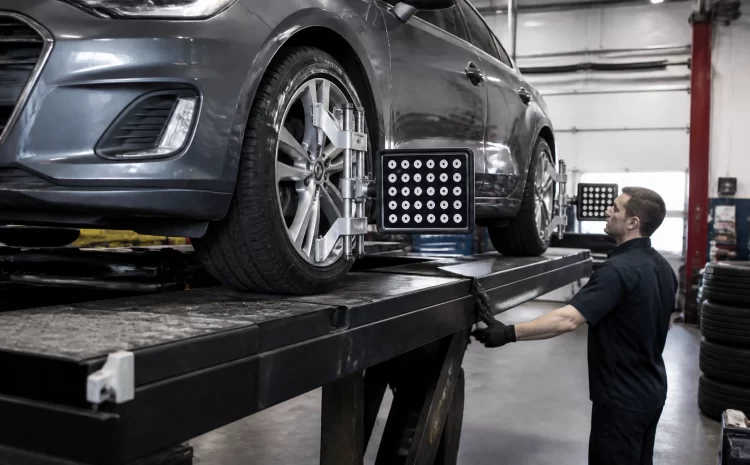
At Dunn’s RevSports, we work with everyday vehicles as well as cars, trucks, and Jeeps that have been customized to reflect their owners’ personalities. Our team uses advanced Hunter equipment, including the latest four-wheel alignment machines, to measure the vehicle precisely rather than relying on guesswork.
What Happens During a Professional Alignment?
A quality alignment service starts with more than placing the vehicle on a machine.
First, the vehicle should be inspected for concerns that could prevent an alignment from holding. Worn steering or suspension components, damaged tires, bent wheels, and incorrect tire pressures can all affect the results.
Next, the technician measures the alignment angles and compares them with the appropriate vehicle specifications. Adjustments are then made where the suspension design allows. Afterward, the steering wheel position and vehicle tracking should be checked to confirm the work.
If the alignment readings cannot be brought into specification, that may indicate a bent or worn component rather than a simple adjustment issue. Finding that problem early can help you avoid replacing tires repeatedly without addressing the underlying cause.
What You Should Do After Hitting a Pothole
If you feel a strong impact, take a moment to check for obvious problems when it is safe:
- Look for a tire bulge, cut, or sudden loss of air.
- Notice whether the steering wheel is now off-center.
- Pay attention to pulling, wandering, or new vibration.
- Check for unusual noises when turning or braking.
- Inspect the tread over the next several drives for uneven wear.
Do not test for pulling by taking your hands off the wheel in traffic. If you need to evaluate how the vehicle tracks, have it inspected by a professional instead.
A tire rotation remains important for promoting even wear, but rotation does not correct misalignment. It only moves the tires to different positions. If the angles are wrong, the wear will continue wherever that tire is installed.
Trust Experienced Alignment Service in Bloomington
The right alignment protects more than your tires. It helps your vehicle steer, brake, and respond with greater consistency. It can also help you catch damaged suspension components before they create a larger auto repair problem.
Dunn’s RevSports brings more than 70 years of combined team experience to vehicle service in Bloomington. Whether you drive a BMW, Ford, Jeep, Dodge, Toyota, or another make, we approach your vehicle with the same care we would give our own.
If a pothole has left your steering wheel crooked, your vehicle pulling, or your tires wearing unevenly, do not wait for the symptoms to become expensive. Book your alignment appointment with Dunn’s RevSports, or contact our Bloomington shop at (812) 331-0400. We will inspect the vehicle, explain what we find, and help get your ride tracking straight again.
