
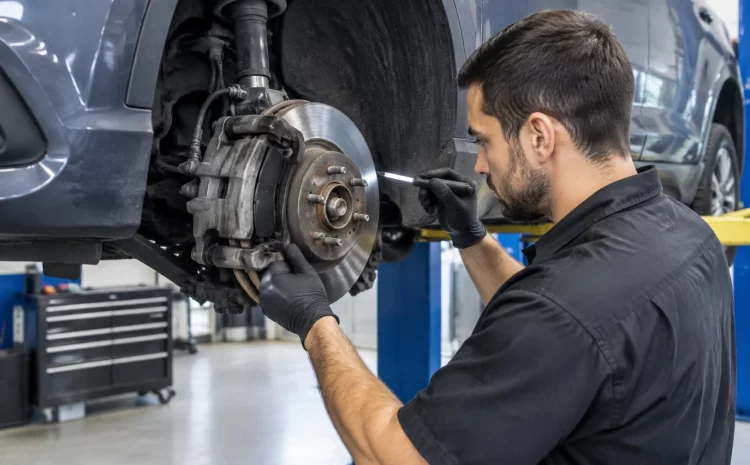
Brake Fluid, Pads, or Rotors? How to Tell Which Brake Repair in Bloomington You Actually Need
When your brakes start making noise or feel different, the first question is usually not, “Do I need brake service?” It is, “Which part actually needs to be repaired?”
That is a fair question. Brake fluid, brake pads, and rotors all affect stopping performance, but they do not fail in the same way. Understanding the difference can help you describe the problem more accurately, recognize an urgent issue, and have a more productive conversation with your mechanic.
At Dunn’s RevSports, we believe you deserve a clear explanation before any repair begins. Here is how common brake symptoms can point toward the component that needs attention, and why Bloomington driving conditions can affect all three.
First, understand what each brake component does
Your braking system works as a group:
- Brake fluid transfers pressure from the brake pedal through the hydraulic system.
- Brake pads create friction against the rotors when you press the pedal.
- Rotors are the metal discs attached to the wheel hub. The pads clamp onto them to slow the vehicle.
Because these parts work together, one problem can sometimes lead to another. For example, worn pads may allow the caliper piston to extend farther, lowering the fluid level in the reservoir. A neglected pad can also damage the rotor. That is why a proper inspection should look at the entire brake assembly rather than replacing parts based on one symptom alone.
Soft or sinking pedal usually points to fluid or hydraulic trouble
Pay close attention to how the brake pedal feels under your foot.
A healthy brake pedal should feel firm and consistent. If it suddenly feels soft, spongy, or unusually low, the issue is more likely related to the hydraulic system than to normal pad wear.
Possible causes include:
- Air in the brake lines
- Low brake fluid
- A brake fluid leak
- A failing master cylinder or another hydraulic component
- Brake fluid that has overheated or absorbed moisture
A pedal that slowly sinks toward the floor while you hold pressure is especially concerning. You may also notice that pumping the pedal temporarily makes it feel firmer. That does not fix the underlying problem. It may simply indicate that the system is struggling to maintain hydraulic pressure.
Brake fluid can darken as it ages. Fresh fluid is often light yellow or nearly clear, while older fluid may appear brown. However, color alone does not tell you whether the fluid is safe. A professional inspection can check the fluid condition, reservoir level, and system for leaks.
If you see a wet spot near a wheel, along a brake line, or beneath the vehicle, do not assume it is harmless condensation. Brake fluid leaks require prompt attention. If the pedal is soft or sinking, avoid driving the vehicle until it has been inspected.
Squealing or grinding usually starts with the pads
Brake pads commonly provide an audible warning before they are completely worn out.
A high-pitched squeal when braking may come from a wear indicator contacting the rotor. It can also be caused by dust, moisture, surface rust, pad material, or a brake component that is not moving correctly. A brief noise after the vehicle has been parked in wet weather is not always a major failure, but persistent squealing deserves attention.
Grinding is more serious. It can mean the friction material has worn away and the metal backing plate is contacting the rotor. Continuing to drive in that condition can quickly damage the rotor and may affect the caliper as well.
Other clues that point toward worn or uneven pads include:
- A longer stopping distance
- Uneven braking from one side to the other
- A firm pedal but reduced braking performance
- A vehicle that pulls during braking
- Pads that look unusually thin through the wheel spokes
Pad thickness should be measured rather than guessed. A pad may appear acceptable from outside the wheel while the inner pad is significantly more worn. Uneven wear can also indicate a sticking caliper, restricted slide, or another issue that needs to be addressed at the same time.
When the pads are worn down, replacing pads alone may be appropriate if the rotors remain within specification and have a smooth, serviceable surface. If the pads have been grinding against the rotor, however, rotor replacement may also be necessary.
Vibration or pulsation usually points toward the rotors
If the steering wheel shakes, the brake pedal pulses, or the vehicle vibrates when you slow down, the rotors deserve close inspection.
Drivers often describe this problem as “warped rotors.” In practical terms, the rotor may have uneven thickness, heat-related changes, scoring, corrosion, or uneven pad deposits. As the rotor turns, the pads encounter those variations, creating a repeating pulsation.
Rotor-related symptoms can include:
- Steering wheel vibration during braking
- A rhythmic pulse through the brake pedal
- Shaking that becomes more noticeable when braking from higher speeds
- Deep grooves or scoring on the rotor
- Blue or discolored heat spots
- A pronounced rust ridge around the outer edge
Not every vibration is caused by the brakes. Wheel balance, suspension components, tire problems, and alignment can create similar sensations. That is why a careful diagnosis matters.
A rotor should not automatically be replaced just because it looks discolored or has light surface rust. The technician should measure rotor thickness and runout, inspect the contact surface, and compare the findings with the vehicle manufacturer’s specifications. If the rotor is too thin, severely scored, corroded, or uneven, replacement is generally the safer solution.

What does a brake warning light mean?
A red brake warning light can indicate low brake fluid, a hydraulic problem, or an issue with the parking brake system. In some vehicles, the fluid level may fall as the pads wear and the caliper pistons extend, but a low level can also be caused by a leak.
The ABS warning light points to a problem with the anti-lock braking system. You may still have basic braking ability, but the vehicle’s anti-lock and stability functions may not work as designed during an emergency stop or on a slippery road.
Do not ignore a brake or ABS warning light simply because the pedal still feels normal. Warning lights can appear before the symptoms become obvious. A prompt inspection can help identify the problem before braking performance deteriorates.
Bloomington driving can be hard on brakes
Local conditions matter when you are trying to understand why a brake problem developed.
Stop-and-go traffic around Bloomington creates repeated heat cycles and frequent friction. Hills place additional demands on the pads and rotors, particularly if you ride the brakes instead of shifting to a lower gear where appropriate. Indiana’s winter weather brings moisture, freezing temperatures, and road salt, which can accelerate rotor corrosion and contribute to sticking hardware or caliper slides.
These conditions do not automatically mean your vehicle needs premium or unnecessary parts. They do mean that brake inspections should account for:
- Corrosion on rotors and brake hardware
- Uneven pad wear
- Caliper slide and piston operation
- Brake fluid condition
- Heat damage from repeated stops
- The vehicle’s actual mileage and driving habits
A vehicle driven mostly on short trips through traffic may wear its brakes differently from one used primarily on longer highway drives.
How to avoid unnecessary brake repairs
You do not need to diagnose the entire system yourself. You do deserve a diagnosis that connects the recommended repair to measurable findings.
When a shop inspects your brakes, ask:
- How much friction material remains on each pad?
- Are the pads wearing evenly on both sides?
- What are the rotor thickness and condition?
- Is there measurable runout or severe scoring?
- Is the brake fluid low, contaminated, or leaking?
- Are the calipers, slides, lines, and hardware operating correctly?
A trustworthy recommendation should explain what the technician found and why a particular part needs to be repaired or replaced. At Dunn’s RevSports, our team uses professional Hunter equipment in our shop, including advanced tire, balancing, and 4-wheel alignment equipment. That helps us evaluate related handling and wheel-end concerns accurately rather than treating every vibration as a brake problem.
With more than 70 years of combined team experience, we understand that the right repair is not always the biggest repair. Sometimes you need pads. Sometimes the rotors have reached the end of their serviceable life. Sometimes the real concern is fluid, a leak, or a hydraulic component. The inspection should determine the answer.
Know when not to drive
Arrange prompt service for persistent squealing, vibration, increased stopping distance, or a brake warning light.
Stop driving and seek professional help if you notice:
- A soft or sinking brake pedal
- A red brake warning light
- Grinding or metal-on-metal sounds
- A strong pull to one side
- Smoke or a burning smell near a wheel
- A major drop in braking performance
Your brakes are not a system to test repeatedly once something feels seriously wrong. If you are unsure whether the vehicle is safe to drive, contact a repair professional before getting back on the road.
Get an honest brake diagnosis in Bloomington
Brake fluid, pads, and rotors each produce different clues, but symptoms can overlap. A soft pedal points more toward fluid or hydraulic trouble. Squealing and grinding often begin with worn pads. Pulsation and vibration commonly involve the rotors. Warning lights and visible leaks require prompt inspection regardless of how the vehicle feels.
If you need brake repair in Bloomington, IN, Dunn’s RevSports can help you understand what your vehicle needs and why. We service all makes and models and approach every inspection with the same goal: safe, dependable performance without unnecessary guesswork.
Book an appointment with Dunn’s RevSports, contact our team, or call (812) 331-0400 to schedule a brake inspection. For dependable auto repair in Bloomington, IN, let our experienced team help you get back on the road with confidence.
